Last Updated on November 4, 2025
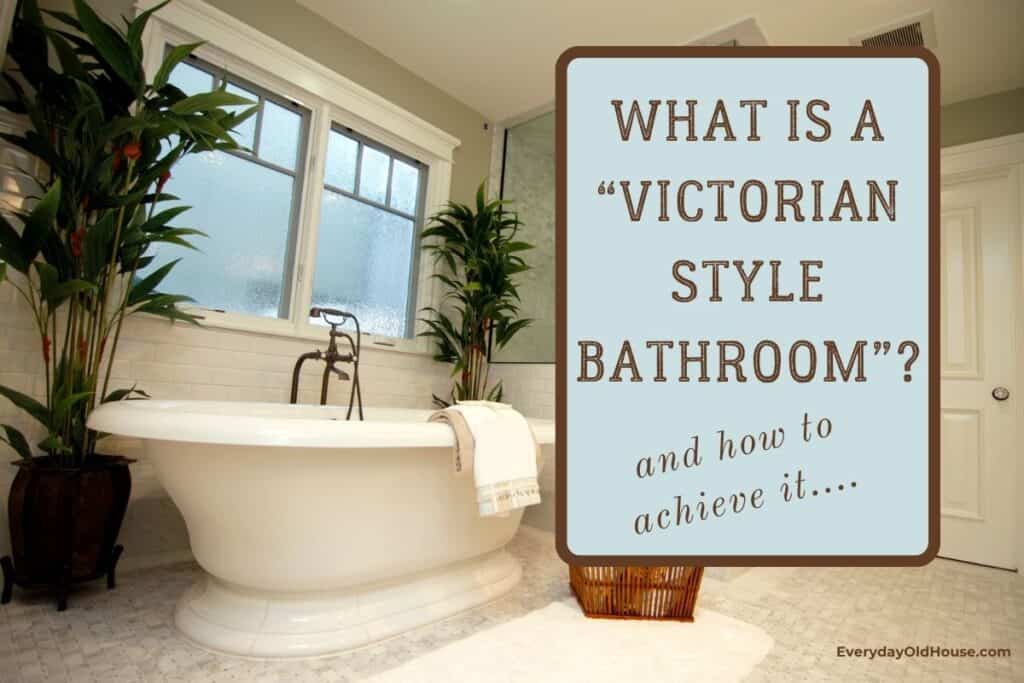
If you’ve ever admired a clawfoot tub, floral wallpaper, or gleaming brass faucet, you’ve already fallen a little bit in love with the Victorian-style bathroom aesthetic. The Victorian era, spanning from the 1830s to early 1900s (i.e. Queen Victoria of England’s reign), was all about opulence, ornamentation, and beauty in even the most functional spaces.
Unlike today’s minimalist trends, Victorian design embraced “more is more.” And honestly? In a world of sterile white bathrooms, sometimes there’s something deeply appealing about a space with personality and history.
Whether you’re restoring a genuine Victorian-era home or just want to add some old-world charm to your modern space, I’m going to walk you through what makes a Victorian-style bathroom so distinctive—and how to recreate that look without breaking the bank.
Disclaimer: I am not an expert, merely a hobbyist passionate about old houses and architecture. While I love to research and read, please take anything I say with a grain of salt…Please reach out if you see anything amuck/ wrong in the below!
What Defines a Victorian-Style Bathroom?
The Victorian-style bathroom was more than a utilitarian room — it was a showcase of sophistication and innovation. Note that early Victorians didn’t originally have indoor plumbing – The first flush toilet was invented by Thomas Crapper in 1861. However, when it became common among the wealthy, homeowners embraced the opportunity to show it off in style.
The result? Bathrooms filled with rich details, ornate finishes, and an unmistakable sense of refinement. These weren’t timid spaces.
Here are the hallmarks that define a Victorian-style bathroom:
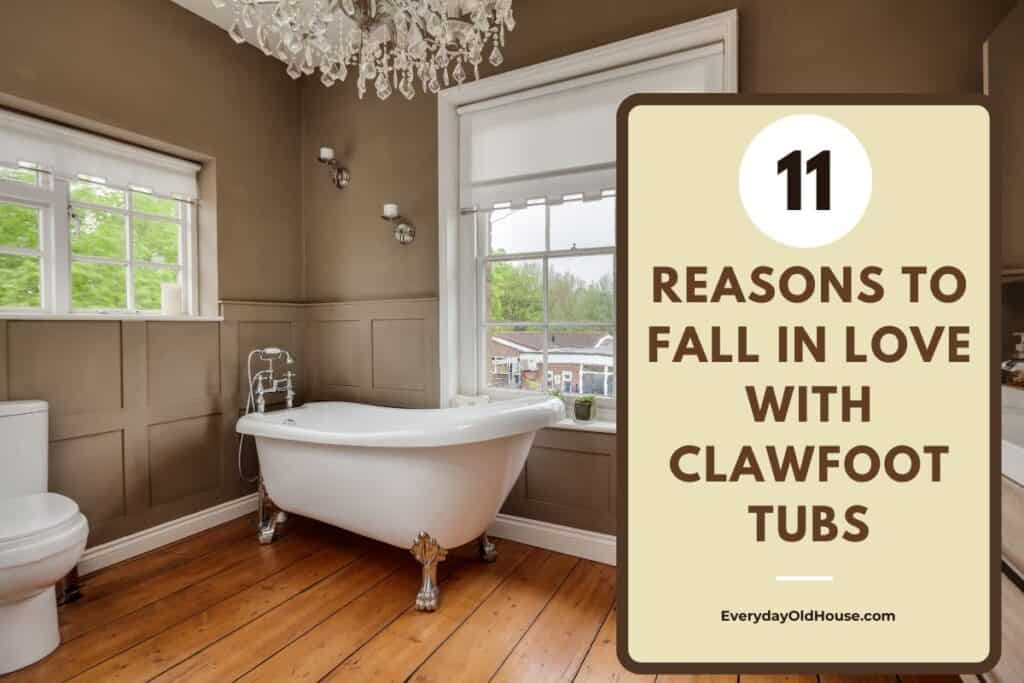
- Luxurious Fixtures: The iconic clawfoot tub is the centerpiece, often made of cast iron and finished with porcelain enamel.
- Classic Materials: Expect marble, ceramic tile, wood wainscoting, and polished brass.
- Decorative Detailing: From intricate moldings to floral wallpapers and beadboard paneling, every surface was a chance to show off craftsmanship.
- Graceful Lighting: Chandeliers or wall sconces cast a soft glow — a reminder that even practical rooms deserved a touch of romance.
- Symmetry and Balance: Furniture-like vanities, framed mirrors, and pedestal sinks were carefully arranged to create harmony.
If you’ve read my earlier post on the Old House Aesthetic, you know that every historic style has its own “visual language”. For the Victorians, bathrooms weren’t just about getting clean. They were about comfort AND luxury, reflecting both technological advancement and aesthetic taste.
Below are 7 key features of Victorian-style bathrooms. You don’t need to do all 7 to achieve the look – just pick a couple and go from there!
7 Key Features of a Victorian-Style Bathroom
Below are the defining elements that bring this look together. Whether you’re restoring original details or recreating the style from scratch, these are the features that set a Victorian bathroom apart.
1. Clawfoot Tub
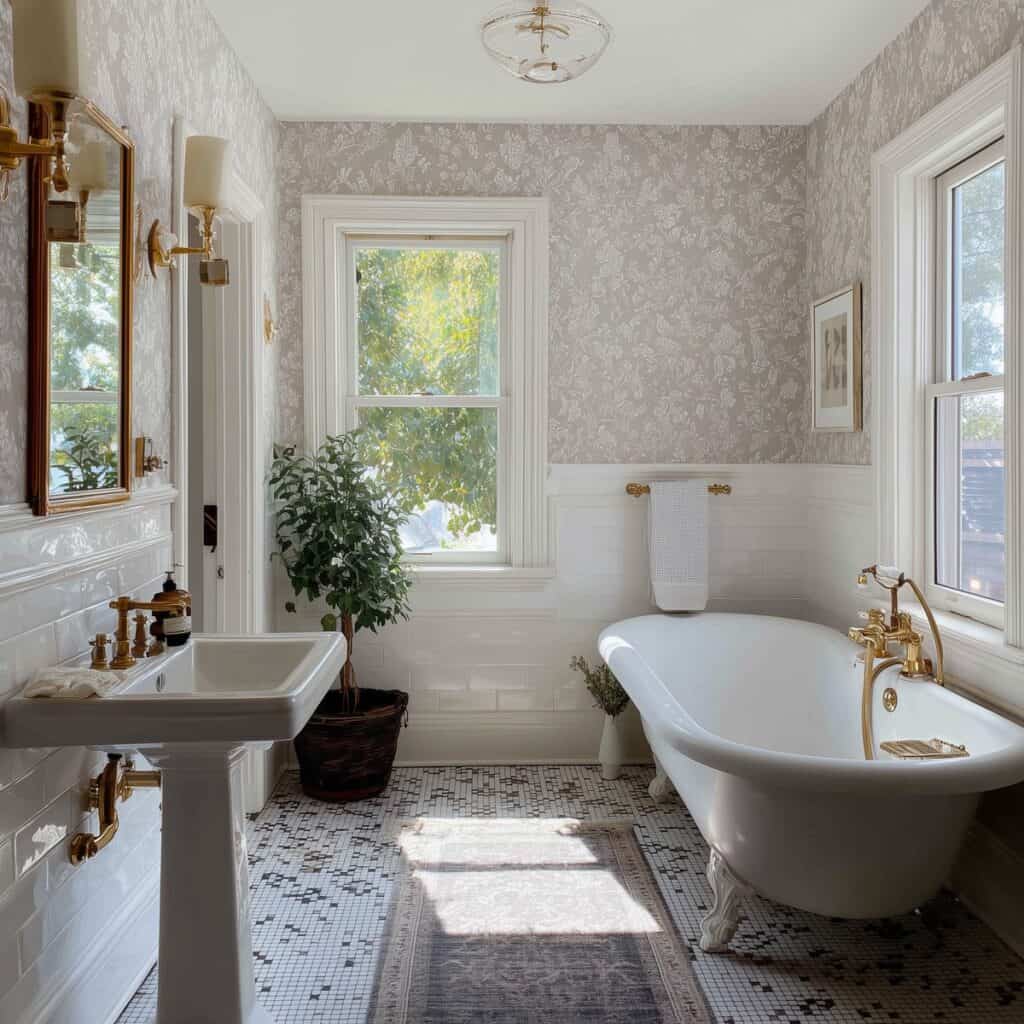
The ultimate Victorian statement piece. These deep soaking tubs were once a symbol of luxury — and they still are today. Look for traditional cast-iron styles or lightweight acrylic reproductions with vintage-inspired shapes like the slipper or double-ended tub.
For inspiration, check out my post on restored vintage clawfoot bathtubs.
2. Pedestal or Console Sink
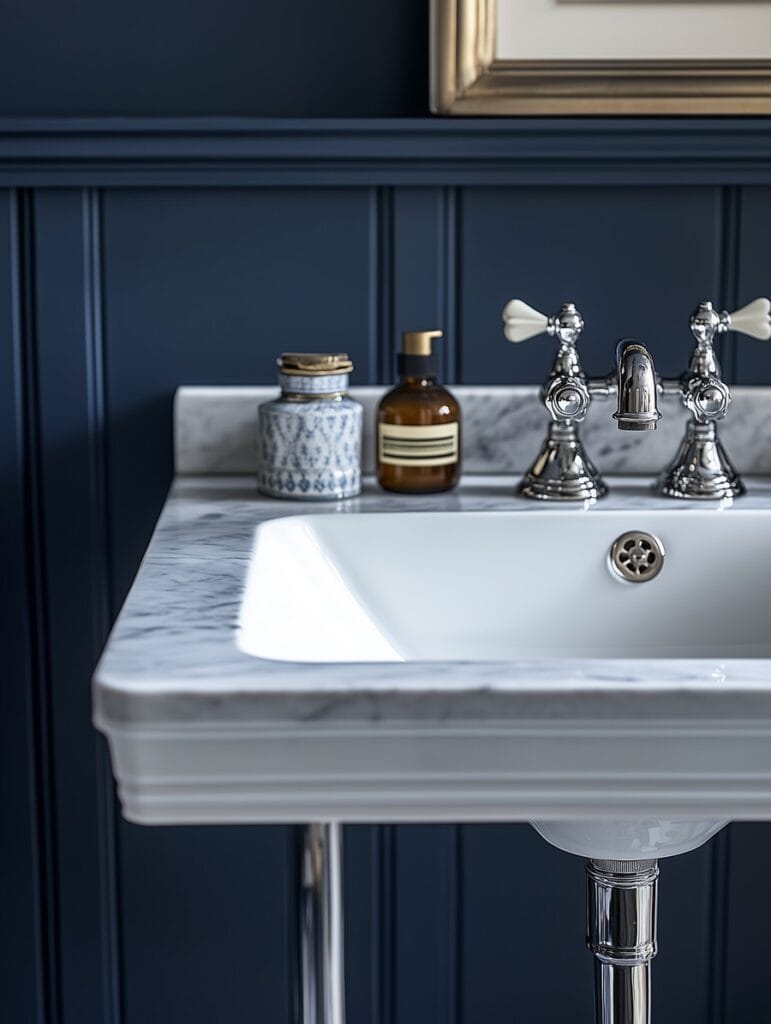
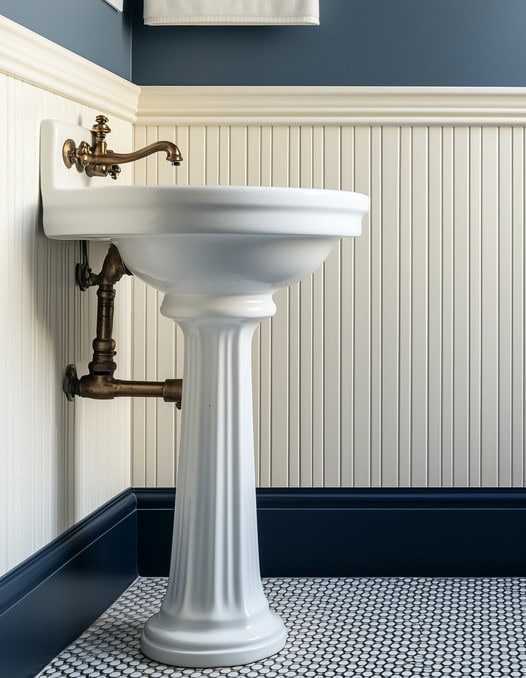
Victorian bathrooms often featured elegant pedestal sinks with porcelain basins and sculpted bases. Console sinks with exposed plumbing also capture that old-world feel, especially with brass or nickel piping.
Pro tip: Pair with a vintage-style mirror or marble backsplash to create instant period charm.
3. Brass or Nickel Fixtures
Warm metals like brass and polished nickel are essential for achieving authenticity. Look for cross handles, porcelain accents, or aged finishes to add subtle patina and personality.
4. Tile and Flooring
Victorian floors often featured mosaic tiles, marble patterns, or encaustic designs in black, white, and gray. Small hex tiles or basketweave patterns are easy ways to evoke this timeless style in a modern bathroom.
5. Wall Treatments
Half-paneled beadboard or wood wainscoting was common, paired with wallpaper in botanical, damask, or geometric prints. Don’t be afraid of pattern — it’s part of what makes this aesthetic so rich and inviting.
8. Lighting
Victorian lighting was decorative yet soft. Think wall sconces with etched glass shades, mini chandeliers, or candlestick-style bulbs to create a warm, romantic glow.
9. High-Tank Toilet
A true conversation starter….. Early flush toilets often had high-mounted tanks with a pull chain above your head. Modern reproductions are available, or you can mimic the look with a classic two-piece toilet and vintage-style seat.
Modern Ways to Recreate a Victorian-Style Bathroom
Bringing Victorian-era beauty into a modern bathroom is about more than finding antique fixtures—it’s about capturing the essence of the era with thoughtful design elements. The key is balance: combining the warmth of old-world character with today’s practical comforts.
What I love about Victorian-inspired bathrooms today is that you can dial the drama up or down. You don’t need to recreate a museum piece. You’re aiming for a space that nods to the era while working for modern life. Here’s a few ideas – just pick a few of the below to incorporate!
Focal Point
Start by identifying your focal point. Every Victorian-style bathroom needs a focal point, and it’s usually something substantial: a freestanding tub with claw feet, an oversized ornate mirror, or an eye-catching light fixture. The Victorians understood that one showstopping piece could define an entire room.
In most Victorian-inspired bathrooms, that’s a freestanding bathtub or ornate pedestal sink. A clawfoot or slipper-style tub instantly evokes Victorian charm, while a marble-topped vanity with curved lines or carved details can serve as a beautiful centerpiece.
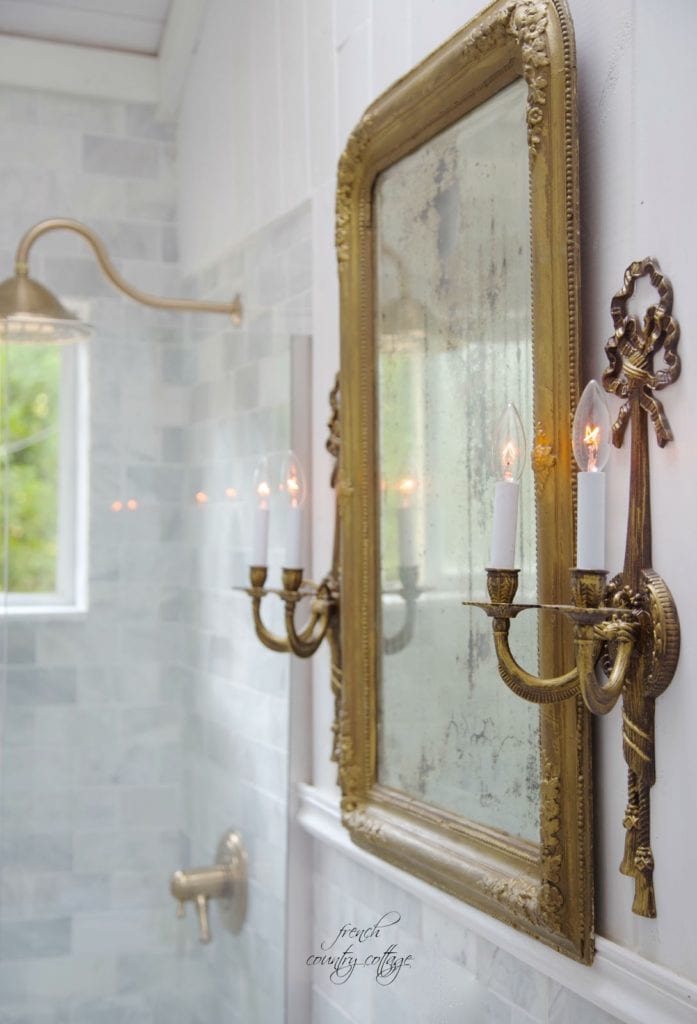
Don’t forget mirrors. Ornate mirrors with gilded or carved frames instantly add depth and reflection, making even a small space feel grander. If you prefer something subtler, look for antique-style frames with curved tops or beveled edges. Check out the beautiful mirror and matching lighting in this guest bathroom from French Country Cottage blog.
Color
Color plays an equally important role. The typical Victorian colour scheme leaned toward rich, moody hues like forest green, navy, oxblood red, and deep plum, softened by ivory or cream. You can recreate the same mood today by painting wainscoting or cabinetry in a dark wood tone, then pairing it with soft floral wallpaper or modern subway tiles (which were popular after the Victorian era) for balance.
Lighting
For lighting, nothing says Victorian elegance like crystal chandeliers or pendant lights that cast a gentle glow across the room. If your space allows, position lighting near a mirror or tub to reflect warm light and enhance the sense of luxury.
Small Bathroom
Don’t worry. Even a compact powder room can channel Victorian charm. Consider a petite pedestal sink, ornate mirrors, and patterned tile floors. Adding a shower curtain with lace or damask detailing can soften the look while maintaining practicality.
Blending Eras
If you’re blending eras, mix antique-style fixtures with modern touches such as a walk-in shower or sleek storage. For example, pair a cast iron clawfoot tub with modern plumbing or glass windows that let in plenty of natural light. The key to a timeless look is balance—mixing old and new pieces that share the same attention to quality and detail.
Decor Details
Decorative elements complete the story. Accessories, fabrics, and materials should all echo the intricate designs and ornate fixtures of the Victorian era.
Try floral wallpaper in a subtle palette. Choose window treatments that diffuse light softly—lace panels or embroidered curtains were popular in 19th-century interiors and still feel timeless today.
Add a freestanding bathtub caddy with brass or nickel hardware, vintage apothecary jars, and framed art inspired by nature or architecture. Even small details—soap dishes, towel bars, or glass shelves—can make a big impact when chosen thoughtfully.
For more ideas, visit the National Trust for Historic Preservation’s resources on period-appropriate interiors
Budget-Friendly Victorian-Style Bathroom Ideas
Here’s the truth: you don’t need a fortune to capture Victorian charm. Start with paint. A rich colour scheme is one of the most affordable transformations you can make, and it immediately shifts the mood. Forest green or navy walls with white trim? That’s Victorian for under $100.
Next, swap out hardware and fixtures. Replacing modern chrome faucets with oil-rubbed bronze cross-handles, updating cabinet pulls, and changing out light fixtures creates dramatic visual impact without renovating. These are weekend projects that completely change how your bathroom feels.
Consider DIY decorative molding or trim work. Adding picture frame molding to walls or a decorative border where walls meet ceiling brings in that architectural detail Victorians loved. It’s more affordable than full wainscoting but delivers similar visual interest.
Haunt salvage yards, estate sales, and online marketplaces for authentic Victorian pieces or good reproductions. Think Ebay, Craigslist, Antique Stores, Habitat for Humanity stores, even ask around on your local Facebook pages. Sometimes one genuine antique piece mixed with affordable modern items creates a more authentic look than all-new reproductions.
Take a phased approach. Maybe this year it’s paint and new hardware. Next year, the freestanding tub. Victorian style is rich and layered—it actually suits a gradual build better than an overnight transformation.
Common Mistakes to Avoid
When creating a Victorian-style bathroom, it’s easy to get carried away. Here are a few pitfalls to steer clear of:
Overcomplicating Design
Intricate detailing is a hallmark of the Victorian aesthetic, but too many ornate designs in one space can overwhelm. Stick with a consistent color palette and repeat a few decorative elements throughout.
Ignoring Function
Victorian bathrooms were built for comfort as much as for beauty. Incorporate modern plumbing, waterproofing, and good ventilation. It’s fine to choose a freestanding tub over a clawfoot if it better suits your layout.
Forgetting Scale
In smaller bathrooms, oversized furniture or fixtures can make the space feel cramped. Choose narrower pedestal sinks and lighter paint tones to create openness without losing character.
Neglecting Lighting
Poor lighting can flatten the details that make Victorian design shine. Layer ambient and task lighting—sconces near mirrors, a pendant above the tub, and candles for ambiance—to bring out texture and warmth.
Wrapping Up
A Victorian-style bathroom isn’t just about nostalgia—it’s about celebrating craftsmanship and elegance in a way that still feels livable today. Whether you embrace dark wood, intricate patterns, or a clawfoot tub as your focal point, the goal is to capture the essence of the era without sacrificing comfort or practicality.
If you’re ready to start planning your own transformation, explore my post on updating outdated hardware or lighting for simple, affordable ways to add Victorian-inspired touches (COMING SOON!).
And if you’re renovating an older property, my Beginner’s Guide to Tracing the History of Old Houses ASDF can help you uncover the stories behind the details you’re trying to preserve.
BEGINNER’S GUIDE TO HOME HISTORY RESEARCH
Interested in researching the history of your old house but unsure where to start? Grab my newly-release:
Beginner’s Guide: How to Trace the History of Your Old House
This 60-page guide takes you step-by-step through 25+ online and in-person resources to create a picture of your home’s history.
Related Posts

Want to be the first to know about new posts? Be sure to follow me on Pinterest, Facebook, Instagram or Twitter of even Etsy! Or better yet… Subscribe below!
My monthly (admittedly sometimes more, sometimes less….) emails are like receiving a unexpected letter from an old friend WITHOUT needing to put on your slippers and walk out to your mailbox…. See? I got ya, my friend!)
[Note: My posts are proudly connected to these amazing link parties full of DIY ideas and inspiration!]