Last Updated on December 4, 2025
You know that feeling when you open the hall closet and three things fall on your head? Or when you can’t find your favorite jeans because your closet looks like a clothing store exploded? Or when you avoid opening those kitchen cabinets because you know the Tupperware avalanche is coming?
Yeah. I’ve been there.
Here’s the thing about decluttering: most advice tells you to dump everything onto the floor and sort it all in one epic weekend. And that’s exactly why most people give up before lunch on Saturday. Real homes—especially homes with kids, pets, hobbies, and actual lives happening in them—need a more realistic approach.
This 12-month decluttering plan breaks your entire home into focused monthly themes and weekly tasks. You’ll tackle one category at a time at your own pace, making steady progress without the overwhelm. Each week includes a simple 15-minute daily task, so even on your busiest days, you’re still moving forward on your decluttering journey.
By this time next year, you’ll walk into every room with calm instead of chaos. No more searching for lost items in your messy home. No more apologizing when someone asks to borrow something because you can’t find it. Just a clutter-free house that actually works for you.
The good news? You can start this easy 12-month decluttering plan anytime—whether you’re beginning in the new year or jumping in mid-summer.

How to Use This Decluttering Calendar
Choose your pace: You can approach each category in two ways:
- Daily bursts: Spend 15 minutes each day on the suggested daily task
- Weekly sessions: Dedicate 1-2 hours on a weekend to knock out each week’s focus area
- Mixed approach: Do whatever fits your schedule that week (this is what most people actually do)
Permission to adapt: If June’s kid-focused tasks don’t apply to you, swap in hobbies and sports gear. If your basement needs two months instead of one, take two months. This is a framework, not a prison sentence.
What if you fall behind? Life happens. Skip to the current month and keep going, or pause and catch up during December’s reset month. The decluttering process works best when you move at your own pace—progress beats perfection every single time.
Before You Begin: Your Declutter Decision Tree
Use this simple system every time you pick up an item:
Question 1: Do I use it regularly?
- Yes → Keep it
- No → Move to Question 2
Question 2: Do I love it or does it hold meaningful sentimental value?
- Yes → Keep it, but store it intentionally (not in a miscellaneous pile)
- No → Move to Question 3
Question 3: Does it still work, fit, or serve a purpose?
- Yes → Donate or sell it
- No → Recycle or trash it
Let’s practice with that bread maker you got as a wedding gift seven years ago. Do you use it regularly? No. Do you love it? Not really. Does it work? Yes. Decision: Donate it. Someone else will actually bake bread with it.
Common Decluttering Mistakes to Avoid
Before we dive into the monthly plan, here are three traps that derail most people:
Mistake #1: Starting with sentimental items. Your grandmother’s jewelry box or your kids’ baby clothes require the hardest decisions. Save these for later (May, Week 4) after you’ve practiced on easier categories like expired pantry items.
Mistake #2: Buying organizing supplies first. Don’t buy a single cardboard box, pen pot, or labelled storage box until after you declutter. You might not need them, and you definitely don’t know what size you need until you see what’s left.
Mistake #3: Creating a “maybe” pile. Maybe piles become permanent piles. If you’re unsure about something, box it up with a date label. If you haven’t opened it in 6 months, donate it unopened.
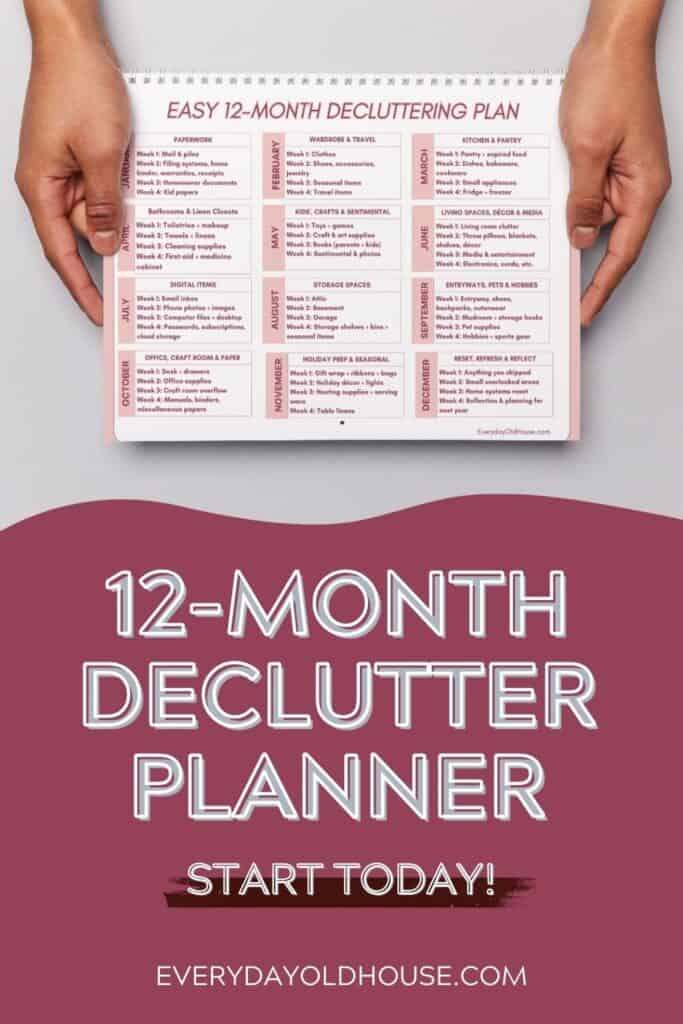
12-Month Decluttering Plan
Here it is! A simple, easy-to-follow 12-Month Decluttering Plan to help you create a organized and calm home! Don’t forget to scroll to the bottom for the printout!
JANUARY = Paperwork, Mail & Household Documents
The perfect time to start your 12-month decluttering plan is January, tackling paper first because it’s the household clutter that sneaks up on you—mail piles, school forms, old takeaway menus, that warranty you swear you filed somewhere. Paper rarely sparks joy, which makes it the perfect category to build your decluttering confidence.
Week 1: Mail, piles, and paperwork hotspots
Attack those stacks on your kitchen counter, dining room table, and that chair in your bedroom that’s become a horizontal filing cabinet.
Week 2: Filing systems, home binder, warranties, receipts
Create one simple filing system that actually works for your life. Whether you prefer physical filing systems or digital scans, you don’t need color-coded tabs—you just need to know where to find your car insurance when you need it.
Week 3: Important homeowner documents
Gather deed, insurance, renovation records, and mortgage paperwork into one secure spot. Future you (during tax season or a home emergency) will be so grateful.
RELATED POST: 60+ Important Papers and Documents For a Home Filing System (Checklist)
Week 4: Kid papers, artwork, school forms
Yes, you can keep your child’s masterpiece. No, you don’t need all 47 paintings of the sun. Pick the best ones, photograph the rest, and recycle guilt-free.
15-Minute Daily Task: Sort or recycle 10 papers each day. That’s it.
FEBRUARY = Wardrobe, Accessories & Travel
Your closet should be a place where you see clothes you actually wear, not a museum of sizes that used to fit or that trendy blazer you wore once in 2019.
Week 1: Clothes
Pull everything out (yes, everything). Keep only what fits, flatters, and makes you feel good when you wear it. Be honest about those “someday” pieces.
Week 2: Shoes, accessories, jewelry
If your shoes hurt, donate them. If you haven’t worn those earrings in two years, someone else will love them. Keep only what you actually reach for.
Week 3: Seasonal items
Coats, sweaters, swimwear—rotate and declutter your seasonal pieces. If last winter came and went without you wearing that parka, it’s time to let it go.
Week 4: Travel items
Luggage, packing cubes, travel toiletries, old maps and guidebooks. Keep what you actually use for trips, ditch the broken roller bag you’ve been meaning to fix for three years.
15-Minute Daily Task: Pull 5 things from your closet to evaluate.
By the end of February, you’ll have a closet where you can actually see your clothes. Getting dressed becomes easier when you’re not digging through clutter.
MARCH = Kitchen & Pantry
March means no more Tupperware avalanches when you open kitchen cabinets. No more cluttered kitchen counters or buying paprika when you already have three bottles hiding in the back of the pantry.
Week 1: Pantry + expired food
Check dates, toss anything stale or expired, consolidate duplicates. Those canned goods from 2021? They’re done.
Week 2: Dishes, bakeware, cookware
How many coffee mugs does one household actually need? Take inventory of your small appliances too—keep your favorites, donate the chipped dishes and the wedding china you never use.
Week 3: Small appliances
The waffle iron you’ve used twice in five years can go. When you take inventory of your small appliances and cooking utensils, keep only the ones that earn their counter space or cabinet real estate.
Week 4: Fridge + freezer
Mystery leftovers, frost-burned meat, expired condiments—clean it all out. Wipe down the shelves while you’re at it.
15-Minute Daily Task: Toss 5 expired or unused pantry items.
RELATED POST: 35+ Easily Dispensable Items to Declutter Kitchen Cabinets [Printable]
APRIL = Bathrooms & Linen Closets
Bathrooms and the medicine cabinet accumulate half-used bath products faster than any other room. This month, you’re reclaiming that storage space.
Week 1: Toiletries + makeup
Check the expiry date on everything. Expired sunscreen, dried-out mascara, hotel shampoo bottles—toss them all. Organize your vanity drawer and keep only bath products you actually use.
Week 2: Towels + linens
Those thread-bare towels can become cleaning rags with cleaning gloves or go in the trash. Keep enough for your household plus a few extras for guests, but donate worn-out linens taking up storage space.
Week 3: Cleaning supplies
Check under every sink. Consolidate duplicates, toss empty bottles, organize what’s left.
Week 4: First-aid + medicine cabinet
Check each medicine type for expiration dates—expired medications need to go (take them to a pharmacy disposal site). Restock your first-aid kit with items you actually need.
15-Minute Daily Task: Toss 1 expired item per day.
RELATED POST: 4 Easy Steps to Declutter a Tiny Linen Closet
MAY = Kids’ Items, Craft Supplies & Sentimental Items
This is where decluttering gets emotional. You’ve spent four months building your decision-making skills—now you’re ready.
Week 1: Toys + games
Involve your kids if they’re old enough—this is an easy way to teach decision-making. Broken toys go in the trash. Outgrown board games and toys get donated to kids who’ll actually play with them.
Week 2: Craft & art supplies
Dried-out markers, incomplete puzzle sets, glitter you’ll never use—be ruthless. Keep only supplies for projects you’ll actually do.
Week 3: Books (parents + kids)
Keep beloved favorites, donate the rest to your library or a Little Free Library. Books are meant to be read, not stored.
Week 4: Sentimental & photo items
Physical photos, albums, scrapbooks, inherited items, memory boxes. This is the hardest week. Take your time. Choose quality over quantity—keep items that truly honor the memory, not every single thing.
15-Minute Daily Task: Sort 10 photos daily or one memory item per day.
JUNE = Living Spaces, Décor & Media
Your living room should be for living, not for storing stuff you never use while apologizing for the mess. This month tackles visible household clutter in your main living spaces.
Week 1: Living room clutter
Clear coffee tables, end tables, and any surface that’s become a dumping ground. Reset the room to actually be relaxing.
Week 2: Throw pillows, blankets, shelves, décor
Keep décor you love. Ditch the stuff that’s just collecting dust because you felt like you needed to decorate.
Week 3: Media & entertainment
Books, DVDs, board games, video games, vinyl—keep what you actually use or love. Create specific zones to store items you’re keeping, and donate the rest to your library or a game café.
Week 4: Electronics, cords, remotes, tech accessories
Mystery cords, old phone cases, remotes for devices you no longer own—recycle or trash them. Use cable organisers to label the cords you keep and create proper storage for tech accessories.
15-Minute Daily Task: Rehome 3 items from any visible surface.
JULY = Digital Declutter
Digital clutter feels overwhelming because you can’t see it piling up—until your phone storage is full and you can’t take photos during the summer holidays. This month is intentionally broken into bite-size tasks. Your mental health will improve when your digital spaces feel organized.
Week 1: Email inbox
Unsubscribe from newsletters you never read and those constant social media notifications. Delete promotional emails. Set up folders or filters to prevent future buildup.
Week 2: Phone photos + screenshots
Delete the 12 blurry shots of your dog, the screenshots you took six months ago, and photos of receipts you’ve already submitted.
Week 3: Computer files + desktop
Organize your downloads folder (you know it’s chaos). Clean up your desktop. Delete old project files you’ll never need again.
Week 4: Passwords, subscriptions, cloud storage
Update your passwords, cancel subscriptions you don’t use, and organize your cloud storage so you can actually find files when you need them.
RELATED POST: Free Printable Password Log Tracker [PDF]
15-Minute Daily Task: Delete 50 photos or unsubscribe from 20 emails a day.
Bonus Tip: Your future self will thank you when you’re not scrolling for 10 minutes to find last year’s vacation pics.
YOU’RE HALFWAY THERE!
Take a moment to celebrate. You’ve tackled seven categories, made hundreds of decisions, and created storage space in your home and life. Your decluttering muscle is stronger than it was in January. The hard part is behind you—now you’re just maintaining momentum.
Remember why you started this 12-month decluttering plan: maybe you wanted less stress, more space, or to stop feeling embarrassed when people visit. You’re getting there, and your mental health is benefiting from the progress.
The next five months focus on the big storage areas and overlooked spaces. You’ve got this.
AUGUST = Storage Spaces (Attic, Basement, Garage)
These areas are the decluttering final boss—but you’ve spent seven months building your decision-making muscle. You’re ready.
Important: These storage spaces can be huge undertakings, especially if you’re working in small spaces. If need be, pick one area and focus on it all month, or spread the tasks across the month. Don’t try to do everything at once. There is NO way I could empty out my attic and basement in one week.
Week 1: Attic
Old furniture, holiday décor, boxes you haven’t opened since you moved in—be honest about what deserves this valuable storage space.
Week 2: Basement
Tackle one section at a time. Donate exercise equipment you don’t use, expired paint, and broken tools.
Week 3: Garage
Sort through household tools, sports equipment, and old paint. Create specific zones (tools, sports gear, seasonal decorations). Hang things on walls to maximize floor space. Recycle old paint and hazardous materials properly.
Week 4: Storage shelves + bins + seasonal items
Use labelled storage boxes for everything clearly with contents and date. If you can’t remember what’s in an unwanted box, it probably needs to go. Organize seasonal decorations by holiday.
15-Minute Daily Task: Toss or donate one bulky item a day.
SEPTEMBER = Entryway, Mudroom, Pets & Hobbies
September tackles the spaces where clutter enters your home—and where it tends to stay. Don’t forget that notorious junk drawer!
Week 1: Entryway, shoes, backpacks, outerwear
Create a landing zone that actually works. Keep only current-season coats and shoes you wear regularly.
Week 2: Mudroom + storage hooks
Assign each family member a hook or cubby. Everything else gets put away properly or donated. The junk drawer in this area? Now’s the perfect time to reset it.
Week 3: Pet supplies
Grooming tools, old toys, expired treats, crates your dog outgrew—donate usable items to your local shelter.
Week 4: Hobbies + sports gear
Be honest about hobbies you’ve abandoned. That guitar you were going to learn? Someone else will actually play it. Sort through sports equipment and board games, keeping only what gets used.
15-Minute Daily Task: Clear one hook, drawer, or shelf.
OCTOBER = Office, Craft Room & Paper Overflow
October circles back to paper and office supplies now that you’ve got momentum. Whether you have a dedicated home office space or just a desk in the corner, this month creates functional work areas.
Week 1: Desk + drawers
Clear your workspace completely using desk organisers for what remains. Keep only what you use weekly in your home office space. Everything else is just visual clutter.
Week 2: Office supplies
Consolidate pens that work in pen pots, recycle dried-out markers, donate excess supplies to teachers or nonprofits. Use desk organisers to keep supplies tidy.
Week 3: Craft room overflow
Unfinished projects, excess supplies, patterns you’ll never use—keep only what you’ll realistically complete in the next year.
Week 4: Manuals, binders, miscellaneous papers
Most manuals are available online. Recycle old binders, shred outdated paperwork, consolidate what’s left.
15-Minute Daily Task: Recycle 10 pieces of outdated paperwork.
NOVEMBER = Holiday Prep & Seasonal Storage
Get ahead of the holiday chaos by decluttering your seasonal items now, before you need them. This is also the perfect time to sort through those unwanted Christmas gifts from last year before new ones arrive.
Week 1: Gift wrap + ribbons + bags
Toss torn wrapping paper, consolidate ribbons, keep only bags and boxes you’ll actually reuse.
Week 2: Holiday décor + lights
Test lights before you store them. Donate Christmas decorations you haven’t used in years. Keep only what you’ll actually put out this season and organize in proper storage.
Week 3: Hosting supplies + serving ware
Keep enough for the gatherings you actually host. That punch bowl you’ve never used? Someone else will love it.
Week 4: Table linens + holiday kitchen extras
Stained tablecloths, mismatched napkins, specialty bakeware you never use—donate or toss. Sort through any unwanted Christmas gifts you received last year while you’re at it.
15-Minute Daily Task: Toss 1 worn or broken holiday item daily.
DECEMBER = Reset, Refresh & Reflect
Instead of a catch-all month, December is your structured home reset—a chance to finish strong and celebrate how far you’ve come in your decluttering journey. As you prepare for next year, take stock of your clutter-free home.
Week 1: Anything you skipped
Catch up on categories you postponed or areas that need a second pass.
Week 2: Small overlooked areas
That junk drawer you keep avoiding, your car, purse, wallet, nightstand—tackle the tiny spots that accumulate household clutter throughout the year. Don’t forget the laundry room if you have one.
Week 3: Home systems reset
Schedule your first donation drop-off of the new year. Set calendar reminders for seasonal decluttering maintenance. Create one new habit to prevent clutter from creeping back.
Week 4: Reflection & planning for next year
Use the reflection questions below to process what you’ve learned and set yourself up for success in the new year.
15-Minute Daily Task: Pick one tiny spot (a single drawer, one shelf, a basket) and reset it.
Congratulations—you’ve completed an entire year of intentional decluttering. Your home is more organized, your mental health has likely improved from reduced stress, and you’ve built habits that will serve you for years to come. As you move forward into next year, remember that maintaining a clutter-free house is an ongoing process, not a one-time achievement. You’ve done the hard work, and now you get to enjoy the benefits of your decluttering journey.
12-Month Decluttering Plan Printable
Here’s your download to a simple guide to organizing your home over the next year in 2 different colors (don’t like either? contact me with your fav color – it’s easy to change!).
Print it out, attach it to your frig, your daily organizer, where ever it will remind you to kick off a new month and week with a category to declutter.
Decluttering Plan – GREEN
Decluttering Plan – CORAL
Related Posts You’ll Love


Want to be the first to know about new posts? Be sure to follow me on Pinterest, Facebook, Instagram or Twitter of even Etsy! Or better yet… Subscribe below!
My monthly (admittedly sometimes more, sometimes less….) emails are like receiving a unexpected letter from an old friend WITHOUT needing to put on your slippers and walk out to your mailbox…. See? I got ya, my friend!)
[Note: My posts are proudly connected to these amazing link parties full of DIY ideas and inspiration!]