Last Updated on November 4, 2025
There’s something irresistible about old homes — the charm, the creaks, the craftsmanship you don’t see much anymore. Lately, I’ve noticed the phrase “old house aesthetic” popping up all over Pinterest. It got me thinking: what is old house aesthetic and exactly does that mean?
I’ve been diving deep into what makes the old house aesthetic so appealing. And honestly, I’m kind of obsessed. The good news? It’s not that hard (or expensive) to capture this vibe. I’ve discovered some really practical ways to bring that vintage charm into any space, and I’m excited to share what I’ve learned.
Let’s explore this beautiful aesthetic together and figure out how to make it work in our own homes.
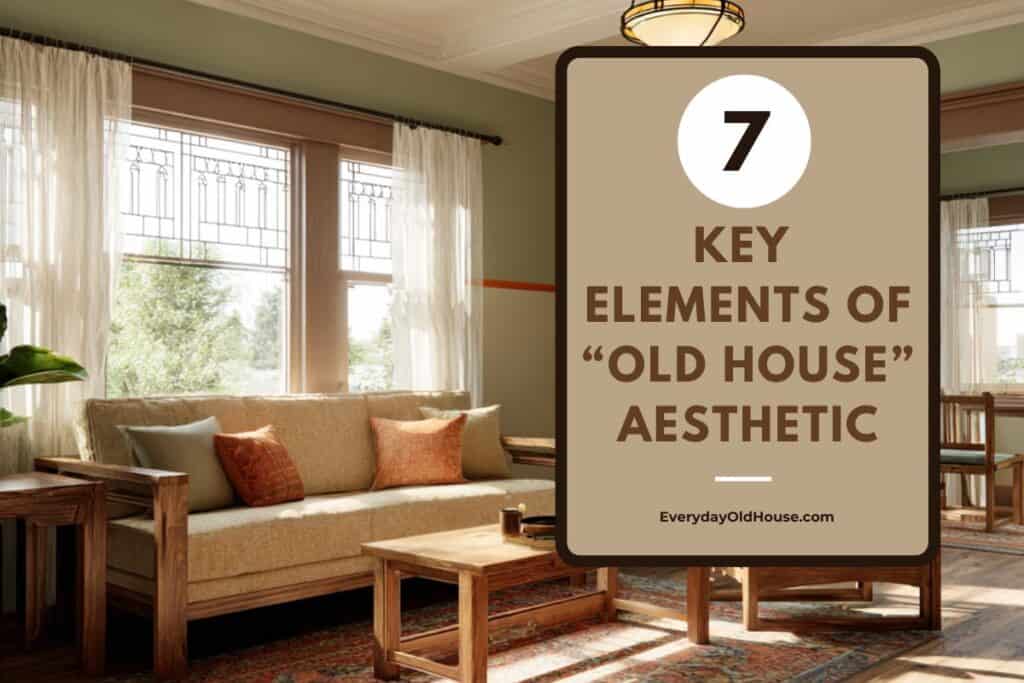
What Does the Old House Aesthetic Mean?
Bottom line, old house aesthetic it’s really a mindset. It’s a way of celebrating history, authenticity, craftsmanship, and personality, even in modern homes that were built yesterday. It’s about the details that make a home feel alive — architectural elements that were built to last, materials that show their age gracefully, and rooms that tell a story. It embraces imperfection and appreciates the wear and tear that comes with a home that’s been lived in and loved.
Erin Napier of HGTV’s Home Town often reminds us that old homes weren’t rushed — they were crafted with care, built to stand the test of time, and filled with details that tell a story. That’s exactly what I love about this style — it reminds us to slow down and appreciate the character that comes with time.
7 Key Features of the Old House Aesthetic
When you start looking closely at older homes — from colonial-style houses to early 20th century bungalows — a few defining features pop up again and again. These are the touches that give old houses their soul.
1. Classic Color Palette
Color makes such a huge difference in nailing the old house aesthetic. I’ve been studying what colors were popular in older homes, and it’s fascinating.
Color choices were tied to architectural style (check out this Historic New England guide). In the Victorian era, people weren’t afraid of bolder, darker, more saturated tones. Shortly after in the Craftsman period, homeowners backed into softer hues found in nature.
These colors create cozy spaces that feel timeless. They have depth that basic beige and grey of modern homes just don’t offer.
Luckily, many paint companies now have historical color collections. They’ve done the research to replicate authentic period hues, which makes our job easier.
2. Period-Appropriate Lighting
Lighting fixtures are like jewelry for your home. It’s amazing how much a different fixture can change the entire feel of a space.
Replace basic builder-grade fixtures to period-appropriate crystal chandeliers, brass sconces, schoolhouse pendants, ornate ceiling fixtures. These all scream vintage charm. Finishes matter too. Aged brass, oil-rubbed bronze, and antique nickel all work beautifully.
One thing I’ve learned? The quality of light matters as much as the fixture. Warm-toned bulbs create that soft, inviting glow that older homes had. It’s way more flattering than harsh white sterile light.
3. Antique Hardware and Fixtures
Similar to lighting, this is one of those details that’s easy to implement and makes a bigger impact than you’d expect.
Think glass knobs, brass keyhole plates, porcelain cabinet pulls. These were all common in early 20th century homes. And they’re still beautiful today.
In kitchens and bathrooms, fixtures can really sell the aesthetic. Farmhouse sinks, bridge faucets with cross handles, for the more advanced DIYers – installing a clawfoot tub. These elements instantly transport you to another era.
Even if major renovations aren’t in the budget, swapping out small hardware creates significant visual change. It’s actually one of the most affordable ways to shift the feel of a space. I’ve been slowly replacing modern door knobs, cabinet pulls, and light switches with vintage alternatives.
Try to keep finishes consistent throughout connected areas. All brass, all bronze, or all nickel. It looks more intentional that way.
Related Post: 6 Annoying Organizing Challenges for Old Houses [And How to Fix…]
4. Curated Decor, Not Designed
The old house aesthetic isn’t about perfection — it’s about personal style. Homes that feel truly authentic are layered over time, not pulled straight from a catalog: a modern sofa with a vintage rug, or a farmhouse table paired with mid-century chairs.
I’m learning it’s okay to mix different eras together. A Victorian era chair with a mid-century sideboard. An early 20th century dining table, Victorian rug with more modern seating. As interior designer Emily Henderson puts it, “The mix of old/new undoubtedly creates an interesting style contrast and more often (and perhaps more importantly) creates a lot of function.” It gives your home – even one with a modern open floor plan – a collected look that’s so hard to fake.
5. Vintage Materials & Accessories
This is where you get to have the most fun. Vintage accessories are the finishing touches that complete the look.
Antique mirrors with aged glass. Old clocks. Oil paintings in gilded frames. Brass candlesticks. Ceramic pitchers. Mercury glass vases. These layers of interest make a space feel collected and loved.
Window treatments can set the style of windows should feel substantial. Drapes or lace panels work better than modern blinds. Natural fibers like linen, cotton, and wool feel more authentic than synthetics.
Not everything needs to be genuinely antique either. Good reproductions mixed with authentic pieces work great. They make the aesthetic more affordable and livable.
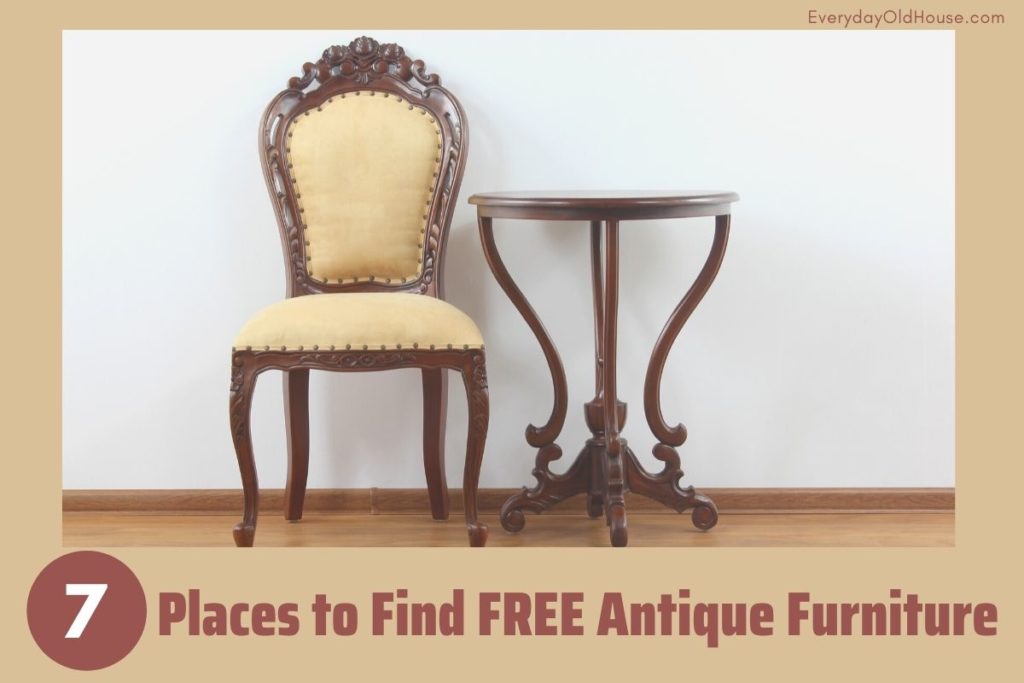
Related Post: Where to Find Free Vintage Furniture to Refinish
6. Architectural Details That Tell a Story
While these last two are critical elements of the old house aesthetic, I’ve listed them last since they take significant effort to incorporate into your home. The other characteristics listed above can be achieved for a lot less time, energy, and probably money. And I’m at a point in my life where I can’t take on larger home restoration projects so maybe you are in the same boat….
Architectural details give old houses layers through its trim, wainscoting, window and doors style, and built-ins. These aren’t just decorative extras — they’re what make a space feel solid and intentional.
If your house doesn’t give a historic homes feel, finding architectural salvage holds genuine pieces with actual history. Old doors, vintage windows, antique mantels, reclaimed wood flooring. Even a bit of crown molding or a salvaged wood door can make a modern home feel grounded in history.
But as interior designers want – the key is making sure salvaged elements work with your existing space. Pay attention to scale and proportion. A massive Victorian mantel might overwhelm a small modern home room.
Related Post: 9 Easy Ways to Find Your Home’s History [Less Than 15 Minutes]
7. Natural Materials
Period homes were built from materials that aged beautifully: wood, stone, brass, brick, and plaster. They develop patina, not wear. When updating or decorating a newer space, swapping out synthetic finishes for real, natural materials makes a world of difference.
For example, try wood floors instead of vinyl, or unlacquered brass instead of polished chrome. These little choices create warmth that feels timeless.
Instead of fighting against wear and patina, embrace it. (Admittedly, that’s hard for me to do). That’s part of the charm. Exposed wood beams, brick walls, stone fireplaces, hardwood floors. These should be featured, not hidden.
Wrapping Up
The more I explore old homes, the more I realize this aesthetic isn’t about chasing a look. It’s about appreciating the beauty of imperfection, the craftsmanship of the past, and the comfort of a space that evolves over time.
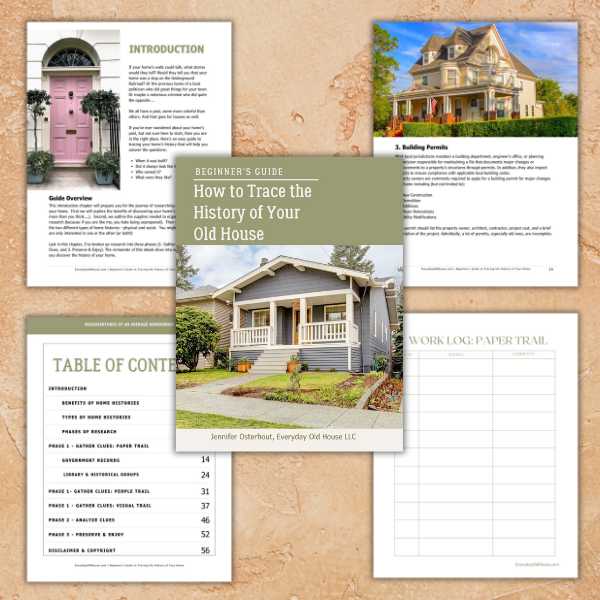
Beginner’s Guide to Tracing the History of Your Old House (eBook)
Uncover the captivating story behind your historic home with this step-by-step beginner’s guide. Learn the expert research methods to find out when it was built, who lived there, and what secrets its walls hold! Perfect for homeowners, DIYers, and old house lovers who want to connect with their home’s past.
Related Posts
Want to be the first to know about new posts? Be sure to follow me on Pinterest, Facebook, Instagram or Twitter of even Etsy! Or better yet… Subscribe below!
My monthly (admittedly sometimes more, sometimes less….) emails are like receiving a unexpected letter from an old friend WITHOUT needing to put on your slippers and walk out to your mailbox…. See? I got ya, my friend!)
[Note: My posts are proudly connected to these amazing link parties full of DIY ideas and inspiration!]