Last Updated on December 11, 2025
Autumn is the perfect time to prep your home’s exterior for fall before cold weather arrives. While my Pittsburgh Steeler husband and I disagree on the greatest quarterback of all time (ahem… Tom Brady), we both know that early fall is the best time to tackle exterior maintenance before the colder months hit our New England home.
Here are 13 essential tips to prep your home’s exterior for fall that both Steeler AND Patriot fans can get behind.

This post contains affiliate links, including but not limited to, Amazon Associates. As such, I earn from qualifying purchases. Full disclosure located here.
Why Should You Prep Your Home’s Exterior for Fall?
Simply put, it ensures our homes are in tip-top shape to endure winter’s harsh conditions. A well-maintained home that receives proper fall season care lowers the risk of surprise repairs, costly damage, and headaches caused by winter weather.
Admittedly, prepping our home’s exterior isn’t exactly thrilling. I’d rather lounge by a propane fire pit sipping spiked apple cider. But protecting your home from winter storms and cold air is essential for your family and budget.
Even the Steelers and Patriots agree that “the best offense is a good defense.” These tips give you the best defense against winter damage.
13 Tips to Prep Your Home’s Exterior for Fall
1. Winterize Air Conditioning
As cooler weather approaches, winterizing your AC condenser is a good idea to prevent wear and extend its lifespan. Preparing for cold air helps protect your investment.
If you have central AC, follow these easy steps:
- Shut off power
- Remove debris from the unit
- Cover with plywood
- Wax the exterior
For window units, remove and store them indoors, or cover them in place. A few removal tips:
- Wear gloves and closed-toe shoes
- Place a towel on the floor to catch dripping water
- Unplug the unit and secure the cord
- Get help for larger, heavier units
2. Inspect Roof & Chimney
Early fall is much easier for roof repairs than winter. Winter storms and ice dams cause significantly more damage to roofs during the colder months. Waiting too long means costlier repairs and potential winter damage to your home’s interior.
Look up and check your roof for damaged or loose shingles to ensure it’s in good shape with no air leaks. If you’re comfortable with heights, you might handle simple repairs like replacing a few shingles. Otherwise, call a professional roofer.
Don’t have a roofer? Check out these 8 Homeowner Tips for Finding a Roofer.

After inspecting the roof, examine your chimney. Is it leaning? Are there cracked or missing bricks? For metal chimneys, look for stains or corrosion signs.
If your chimney is exposed in the attic, check for cracks or water stains. If you find damage, call a professional.
And if you plan to use your fireplace this winter, test your smoke detector and carbon monoxide detectors now.
3. Clean Gutters
Gutters and downspouts quietly do their job, shuttling rainwater away from your house. But when clogged, they cause flooded basements or foundation damage. Clean gutters also prevent ice dams that form during winter weather.
I’m scared of heights, so I hire our roofing contractor annually. But if you’re braver, grab your ladder and clear debris from gutters. Ensure downspouts push water away from the house to protect against winter damage to your foundation.
4. Change Out Window and Door Screens
Depending on your windows and doors, you may need to remove summer screens. Before storing, clean and inspect for tears or damage. After repairs, store them safely until spring.
The fall season is also a great time to check for drafts and air leaks around windows and door frames. Sealing air leaks now reduces heating bills throughout the winter weather. Add weatherstripping where needed and consider a fresh coat of paint to your front door.
For tips on finding drafts, read my guide on detecting drafty windows and doors.
5. Say Goodbye to Outdoor Living
This is the saddest chore for me – saying goodbye to my patio furniture. For those in warmer climates lounging outside year-round, I envy you (and await your February invitation!).
But for those facing cold weather, it’s time to prep your outdoor furniture for winter. Wipe cushions and clean any dirt or stains. If you have washable covers, launder them per instructions. On a sunny day, hose down furniture and scrub with warm water and dish soap.
Let everything dry completely, then store. A garage, shed, or basement is ideal protection from wind, rain, snow, and sleet. No space? Purchase covers to shield furniture from winter elements.
Don’t forget your grill or outside kitchen! For tips on winterizing your grill, check out the BBQ Guys.
6. Rake Leaves
We have two huge maple trees that drop what feels like 5 million leaves each fall season. Once all leaves fall, clean up your yard. Early fall raking prevents lawn damage when cold air arrives.
Tips to make raking easier:
- Use a quality rake
- Rake with the wind
- Rake in rows
- Consider using a tarp
- Mow and mulch simultaneously
7. Trim Landscaping and Prep Garden
Clean up your yard by removing dead shrubs and bushes, and cutting dead or broken branches. Trim any low-hanging trees that obscure walkways or touch the roof. In snowy climates, snow and ice weight can cause branches to hang lower or snap.
Tackle flower and vegetable garden bed cleanup. Bring in potted plants that won’t survive winter. Empty ceramic or clay pots too large to bring indoors (otherwise they’ll freeze and crack).
Plant your spring bulbs like tulips, crocus, and daffodils now.
For deeper garden preparation, check out this printable Fall Garden Chores Checklist.
8. Remove Hoses & Turn Off Spigots
Disconnect all garden hoses, including any rain barrels, from exterior faucets and drain them completely. If water remains in hoses, it can freeze and weaken the hose’s integrity. To protect garden hoses from cold weather, store them indoors in a garage or basement.
Find the shut-off valve to your outdoor spigot—ours is in the basement near the exterior wall. Protecting outdoor faucets from cold weather prevents burst pipes. A few years ago, we forgot to turn off our backyard spigot and paid the price with a burst pipe. Yikes.
If you have an in-ground sprinkler or irrigation system, drain your water lines now. Water left in pipes during the colder months can cause them to burst, leading to expensive water damage.

9. Heating System & Safety Check
Before the fall season transitions to full cold weather, schedule your heating system inspection. A well-maintained heating system reduces heating bills and prevents mid-winter breakdowns during winter storms.
This is also the perfect time to test all smoke detector and carbon monoxide detectors batteries. Check that fire extinguishers are in good shape and not expired. These simple safety checks keep your home in tip-top shape for the colder months ahead.
10. Store Lawn Mower
Your lawn mower worked hard all summer—now give it some rest. The fall season is the best time for this maintenance. Before storing it in the garage or shed, take it for a professional tune-up so it’s ready for spring.
Or skip the professional and at least drain the oil and gas (with proper disposal). Leaving gas sitting in your lawn mower’s tank over winter causes damage and shortens its lifespan. Store your lawn mower in good shape for next season.
Don’t forget other lawn equipment like your weed whacker and leaf blower!
11. Test Snow Blower
Don’t be stuck with a snow blower that won’t start the morning after the first 2-foot blizzard. Nobody wants to be that person.
If you have a snow blower, get it tuned-up or repaired during early fall before temperatures drop. Stock up on ice melt and walkway reflectors before winter storms arrive.
12. Seed & Aerate Lawn
Tending to grass in fall may seem ridiculous when it’ll look dead for six months, but it’s genius. Aerate, fertilize, and reseed your lawn, including dead spots. While blades look dormant, roots remain active.
Protect your lawn from winter damage with fall fertilization. Keep grass in good shape through the colder months. Applying fertilizer helps lawns turn greener in spring, making you the envy of the neighborhood.
13. Seal Driveway and Walkway Cracks
Cracks in driveways and walkways happen from tree roots, heavy loads, and repeated freezing and thawing. Water seeps into cracks, freezes, expands, and creates larger cracks. It’s a slippery slope from one small crack to a crumbling walkway that guests (especially cute trick-or-treaters!) trip over.
Take an hour or two for preventative maintenance during cooler weather. Fill small cracks with concrete crack sealer. Repair them before they become bigger problems.
Fall Home Maintenance Checklist
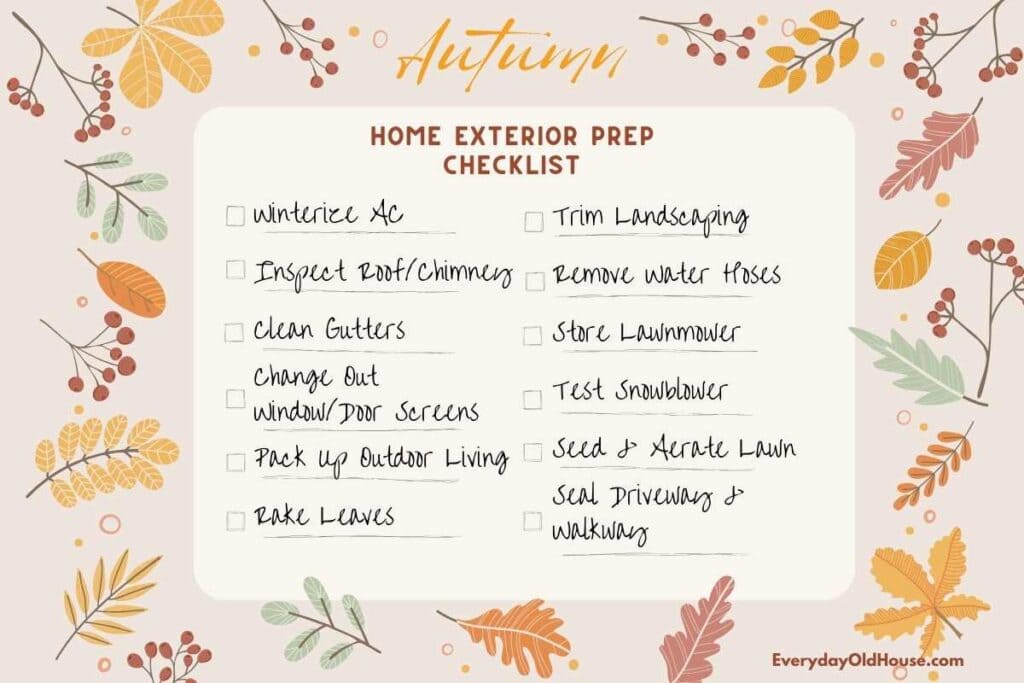
Download my free Fall Home Maintenance Checklist that coincides with these 13 tips. It’s available in three formats:
- Printable PDF version
- Google Sheets
- Microsoft Excel
This checklist contains all tasks needed to prep your home’s exterior for fall before transitioning from hot summer days to blustery winter nights.

Looking to prep your home’s interior for the fall? Check out The Porch’s Guide to Fall Maintenance.
Related Posts


Want to be the first to know about new posts? Be sure to follow me on Pinterest, Facebook, Instagram or Twitter of even Etsy! Or better yet… Subscribe below!
My monthly (admittedly sometimes more, sometimes less….) emails are like receiving a unexpected letter from an old friend WITHOUT needing to put on your slippers and walk out to your mailbox…. See? I got ya, my friend!)
[Note: My posts are proudly connected to these amazing link parties full of DIY ideas and inspiration!]