Last Updated on November 7, 2025
Can I be honest? Most New Year’s resolutions feel like setting yourself up to fail. But homeowner resolutions? Those are different. These actually stick because you’re literally living with the results every single day.
I’ve been living in my old house for almost 15 years now, and I’ve learned that the difference between feeling overwhelmed by homeownership and actually enjoying it comes down to tackling the right things at the right time. Not everything at once (that’s madness), but the stuff that truly matters.
So here are 11 resolutions that won’t gather dust by February. Pick two or three that resonate with where you are right now, and let’s make 2026 the year your house stops stressing you out.

1. Actually Fund That Emergency Account (No Really, This Time)
Here’s the thing nobody tells you when you buy a house: something expensive WILL break at the worst possible time. Your water heater doesn’t care that you just paid for holiday gifts or that you’re planning a vacation.
The reality: Most experts recommend saving 1-3% of your home’s value annually for repairs and maintenance. So if your home is worth $300,000, that’s $3,000-$9,000 per year. Sounds like a lot, right? But broken down, it’s $250-$750 per month.
Start small if you need to. Even $50 per paycheck adds up. Set up an automatic transfer to a separate high-yield savings account the day after payday. Name it something like “House Emergency Fund” so you’re not tempted to raid it for a new couch.
2. Put Together an Actual Emergency Kit (Not Just Good Intentions)
Between climate change making weather more unpredictable and the general chaos of modern life, having an emergency kit isn’t paranoid—it’s practical.
What you actually need:
- Water (1 gallon per person per day for 3 days)
- Non-perishable food (again, 3 days worth)
- Flashlights, batteries, and a hand-crank radio
- First aid kit and necessary medications
- Copies of important documents in a waterproof bag
- Cash (ATMs don’t work when power’s out)
- Pet supplies if you have furry family members
I keep mine in a large plastic bin in the basement. Check it twice a year when you change your smoke detector batteries—rotate the food, update medications, check the batteries.
Ready.gov has great checklists if you want to get thorough about it. Or honestly? Buy a pre-made kit and call it done.
RELATED POST: 60+ Important Papers and Documents For a Home Filing System (Checklist)

3. Create a Home Inventory Before You Need It
I know, I know. This sounds boring. But when a friend had a kitchen fire last year, trying to remember everything they owned for the insurance claim was a nightmare on top of a nightmare.
RELATED POST: What the Heck is a Home Inventory?
The easiest way: Walk through your house with your phone and just film everything. Open closets. Open drawers. Narrate if you want (“This is the living room, that TV was $800, the couch was $1,200…”). Upload it to cloud storage. Done.
For big-ticket items, snap photos of serial numbers and receipts. Apps like HomeZada or even a simple printable checklist work great. You can also check out these 12 valuable reasons why a home inventory matters.
Update it whenever you buy something significant. It takes 10 seconds to snap a photo of a receipt, but it’s nearly impossible to remember what you paid for something two years ago.
RELATED POST: How to Easily Create a Free Home Inventory [HomeZada Review]

4. Test Your Detectors (It Takes 5 Minutes)
Indoor air quality, like other environmental hazards, is crucial for a healthy home. And, I’m going to be your annoying friend here: when’s the last time you actually tested your smoke detectors and carbon monoxide detectors?
The stats are sobering: Carbon monoxide poisoning causes around 400 deaths annually in the US. Residential fires kill about 2,800 people per year. Both are largely preventable.
Make it easy:
- Pick two days a year (New Year’s Day and July 4th work great)
- Test every detector in your house
- Replace batteries in any that need it
- Replace the whole unit if it’s 10+ years old for smoke detectors or 5-7 years for CO detectors
Set a recurring reminder on your phone right now. Seriously, pause and do it.
5. Do One Thing to Reduce Fire Risk
Old houses (like mine) have extra fire risk—old wiring, old heating systems, lots of wood. But even newer homes aren’t immune.
Pick one thing from this list:
- Get your dryer vent professionally cleaned
- Check your electrical panel for warm spots or buzzing (call an electrician if you find any)
- Replace frayed cords and overloaded power strips
- Keep a fire extinguisher in the kitchen (and actually know how to use it)
- Clear the area around your furnace and water heater
- Create a fire escape plan with your family
A few minutes of maintenance could literally save your life.
Related Post: Guide to Fire Extinguishers [Homeowner Perspective]

6. Actually Read Your Home Insurance Policy
I worked in insurance for years, and I still don’t fully understand my own homeowners policy. It’s dense stuff. But here’s what you need to do:
Schedule 30 minutes with your insurance agent (virtually is fine) and ask:
- What’s NOT covered that I think is covered?
- Do I have enough coverage if I had to rebuild today? (Construction costs have skyrocketed)
- Are there discounts I’m missing?
- Should I increase my deductible to lower my premium?
- What riders might I need for expensive items?
Until this year I would say getting a few competitive quotes doesn’t hurt— it could reveal better coverage for less money. BUT we did that and ran into major issues with an insurance company that came back for more money and a list of demands (like removing an old tree that was structurally sound and was our only source of shade in our backyard). Proceed with caution.
7. Review Your Mortgage Situation
If you bought or refinanced during the 2020-2021 ultra-low rate period, you’re probably sitting pretty. But it’s still worth checking in on your mortgage annually.
Things to consider:
- Paying on time: Obvious but crucial. Set up autopay if you haven’t
- Making extra payments: Even one extra payment per year can shave years off your mortgage
- Reviewing your escrow: Is your tax escrow accurate? If not, you might get hit with a massive bill.
- PMI removal: If you’ve hit 20% equity, you might be able to drop mortgage insurance
With rates where they are in 2025-2026, refinancing probably doesn’t make sense for most people. But if your financial situation has improved significantly, it might be worth running the numbers.
8. Upgrade Your Home Security (Even Small Steps Count)
Home burglaries happen every 26 seconds in the US. Over half happen during the day. The goal isn’t to turn your house into Fort Knox—it’s to make it less appealing than your neighbor’s house. (Sorry, neighbors.)
Free or cheap options:
- Keep windows and doors locked (shockingly uncommon)
- Install motion-sensor lights
- Trim bushes near windows and doors
- Get to know your neighbors (best security system ever)
- Use timers on lights when you’re away
- Bring in packages immediately
If you want to invest more:
- Smart doorbell camera ($100-250)
- Basic security system ($200-500)
- Smart locks with cameras
RELATED POST: 10 Free Ways to Protect Your Home Without a Security System

9. Complete ONE Meaningful Home Project
Notice I said ONE. Not seventeen. One.
Pick something that’s been bothering you or that would genuinely improve your daily life. Not what HGTV says you should do or what would impress guests. What would make YOU happier in your home?
Big or small, each upgrade increases comfort and adds value to your home. Even small weekend projects can make a big visual impact and keep your space feeling fresh. Try:
- Painting your front door a bold color to instantly boost curb appeal
- Installing visible address numbers to improve both style and safety
- Updating outdated hardware or lighting for a quick, budget-friendly refresh
- Building a mini raised garden bed to add charm and functionality outdoors
If your budget allows, consider investing in a larger project like upgrading your HVAC system or insulation to boost comfort and energy efficiency long-term.
Need inspiration? Check out Home Projects Under $10 for simple, affordable upgrades that make a big impact without draining your wallet.
RELATED POST: 50 Inexpensive Home Improvement Projects Under $10
10. Do ONE Thing for Energy Efficiency
Your future self (and wallet) will thank you. Energy costs aren’t going down, so anything you do now pays dividends forever.
Quick wins:
- Switch to LED bulbs (like $20 total investment, saves hundreds over time)
- Install a programmable or smart thermostat ($100-250, saves 10-23% on heating/cooling)
- Seal drafty windows and doors with weatherstripping ($15-30)
- Add insulation behind radiators (if you have them)
- Reverse ceiling fans (clockwise in winter, counterclockwise in summer)
Bigger investments:
- Air seal your attic (huge ROI)
- Upgrade to Energy Star appliances when current ones die
- Install a heat pump (might qualify for tax credits in 2026)
- Add insulation to your attic
We sealed up our drafty windows last winter with those plastic film kits. It looks terrible but made a noticeable difference in both comfort and our heating bill. Fashion vs. function? Function won.

11. Set Up a Home Maintenance System That Actually Works
Here’s the truth: home maintenance is like going to the dentist. If you skip it, everything gets more expensive and painful later.
Choose your method:
- Phone app: HomeZada, BrightNest, or even just recurring reminders
- Physical planner: Create your own homeowner journal or buy a pre-made planner
- Spreadsheet: If you’re a data person (I see you)
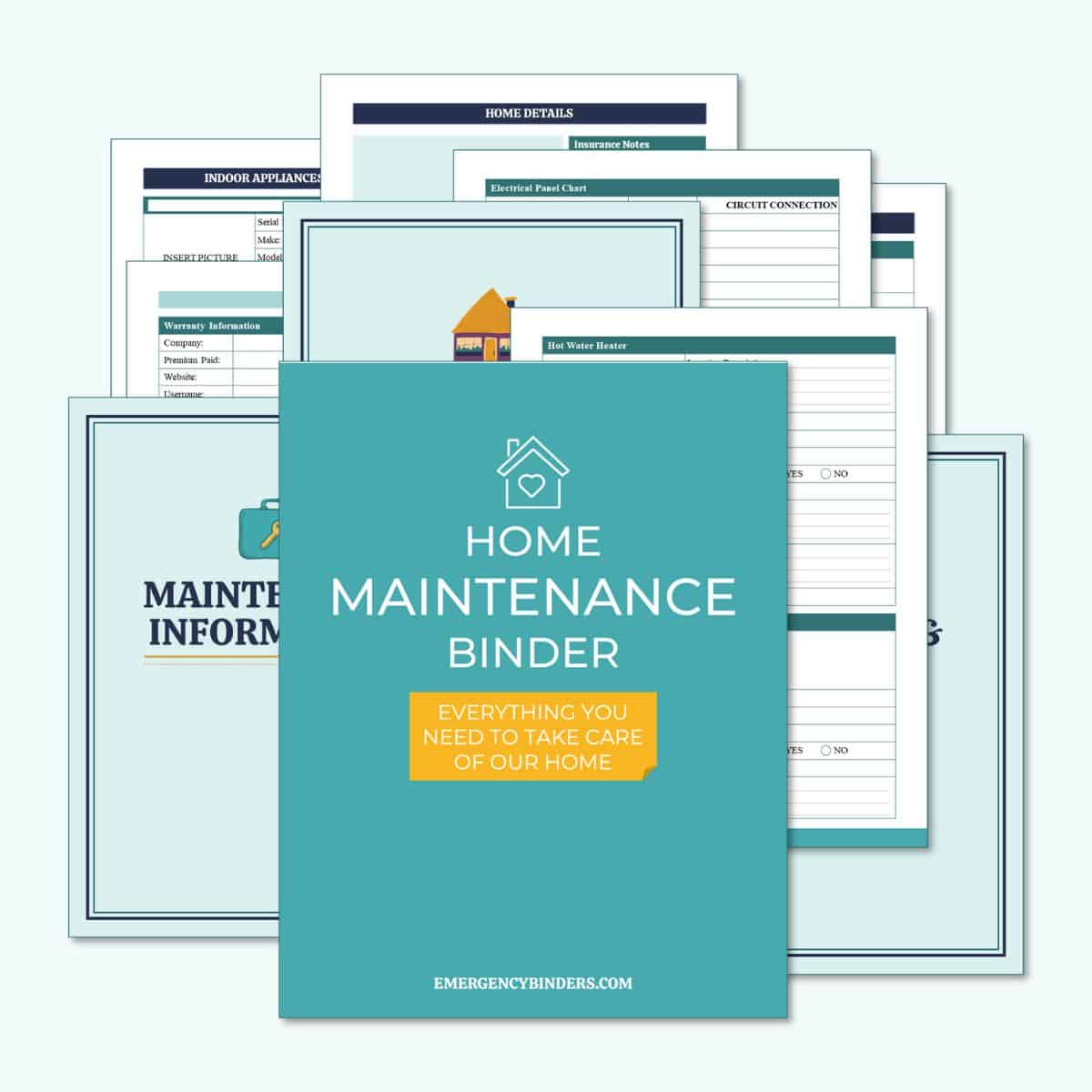
I use a combination of a simple recurring task system in my phone and the Home Maintenance Binder below. Nothing fancy. Every fall, i get a phone reminder to clean the gutters. Every six months I flip through the binder. It’s not sexy, but it works.
12. Bonus: Declutter One Space (Your Sanity Will Thank You)
Okay, this is technically a 12th resolution, but hear me out. Homes accumulate stuff like pockets accumulate lint. It just happens.
You don’t need to become a minimalist or Marie Kondo your entire house. Just pick ONE space that makes you twitch every time you see it.
Start here:
- The junk drawer
- Under the bathroom sink
- The hall closet
- Your nightstand
- The garage corner where stuff goes to die
Set a timer for 30 minutes. Pull everything out. Trash the broken stuff, donate what you don’t use, organize what remains. Done.
I do this quarterly and I’m still finding random cables from electronics we haven’t owned since 2015.
Wrapping it Up
Whether you’re a brand-new homeowner or settled in your fifth house, these 11 simple homeowner New Year’s resolutions will help you prepare for whatever next year brings! Happy New Year – and here’s to 2024!
Related Posts



Want to be the first to know about new posts? Be sure to follow me on Pinterest, Facebook, Instagram or Twitter of even Etsy! Or better yet… Subscribe below!
My monthly (admittedly sometimes more, sometimes less….) emails are like receiving a unexpected letter from an old friend WITHOUT needing to put on your slippers and walk out to your mailbox…. See? I got ya, my friend!)
[Note: My posts are proudly connected to these amazing link parties full of DIY ideas and inspiration!]